REVIEW · SANTO DOMINGO
Santo Domingo Small Group Walking Tour: Beer and Specialty Coffee
Book on Viator →Operated by Xcape Tours · Bookable on Viator
Two hours can feel like a whole day in Santo Domingo. This small-group walking tour takes you through the Colonial Zone UNESCO area, then lets you settle in with specialty coffee or tea, local beer, and a taste of Dominican spiced rum.
I like the way the route hits big “firsts” and iconic corners without getting boring. You’ll pause at major stops like the Catedral Primada de las Américas and the old streets around Calle Las Damas, while your bilingual guide ties the buildings to real stories you can picture.
One thing to consider: access changes. Some museums close on Mondays, and the Alcázar de Colón plus the Pantheon are currently listed as closed for renovations, so you’ll see those from the outside.
In This Review
- Key things I’d zero in on
- Why Santo Domingo’s Colonial Zone works so well on foot
- Meeting at Casa Barista & Co. and what the small-group format means
- The coffee-and-beer rhythm: what’s included and how to pace it
- Parque Colón: Columbus-era symbolism in a small central square
- Catedral Primada de las Américas: first in the Americas, still a must-see
- Calle Las Damas: what the first paved road feels like
- Ozama Fortress and the Pantheon: power and national memory in one stretch
- Reloj de Sol: a stone clock that kept officials on schedule
- Museo de las Casas Reales: the Spanish governor’s court to a museum story
- Plaza de la Hispanidad and Alcázar de Colón: romantic plaza views plus real early power
- Ruinas de San Francisco and Hospital Saint Nicholas of Bari: ruins that still teach
- What the guides (like Jean Carlos and Paco) add to the value
- How to decide if this tour fits your style
- Should you book this beer and specialty coffee walking tour?
- FAQ
- How long is the Santo Domingo Small Group Walking Tour?
- What’s included in the price?
- Is it a small group tour, and is it bilingual?
- Can I visit the museum and cathedral on Mondays?
- Do I need specific clothing for the cathedral?
- What happens if I need to cancel?
Key things I’d zero in on
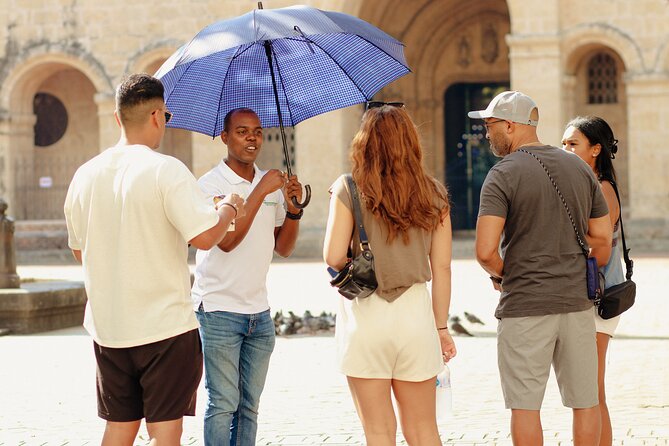
- Coffee/tea plus beer plus mama juana: tastings are part of the sightseeing rhythm, not an add-on at the end.
- Colonial Zone route that stays walkable: you cover a lot of ground around the historic core without jumping around the city.
- Catedral Primada visit includes admission: you’re not just viewing from the sidewalk.
- Guides with personality: reviews highlight guides like Jean Carlos and Paco as friendly, funny, and good at answering questions.
- You’ll likely see some sights from the outside: renovations and schedule closures mean the tour may be more exterior-focused on certain days.
- Dress for the cathedral: shoulders and knees must be covered if you enter.
Why Santo Domingo’s Colonial Zone works so well on foot
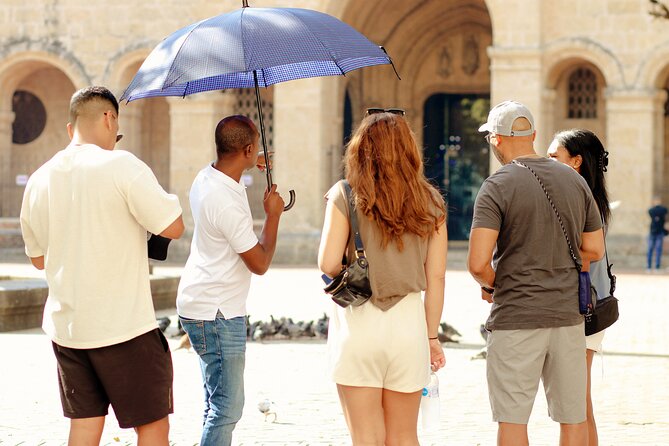
Santo Domingo’s Colonial Zone is the kind of place where you get your bearings fast. The streets are packed with landmarks tied to the earliest European presence in the Americas, and the walking loop naturally keeps you near the action. You’re not hunting for “one cool thing”—you’re moving through a concentrated pocket where churches, plazas, and old civic buildings sit close together.
This tour leans into that advantage. It’s designed around a cluster of famous stops—parque views, a cathedral interior, and a few classic lanes and ruins—so you feel like you’re learning the city’s skeleton as you walk it. And because the group stays small (max 12), it’s easier to ask questions, pause when something catches your eye, or slow down inside the places that allow it.
Meeting at Casa Barista & Co. and what the small-group format means
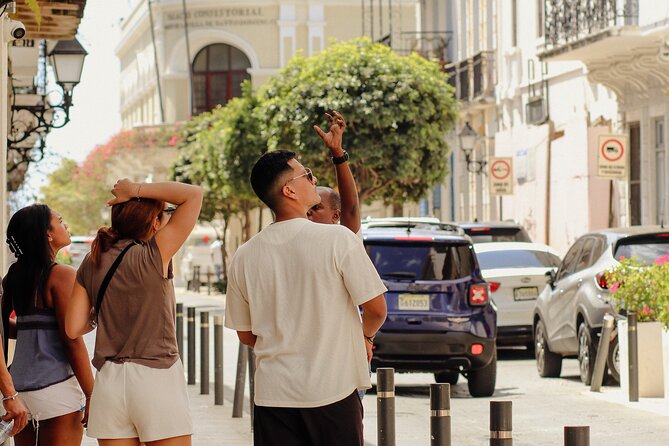
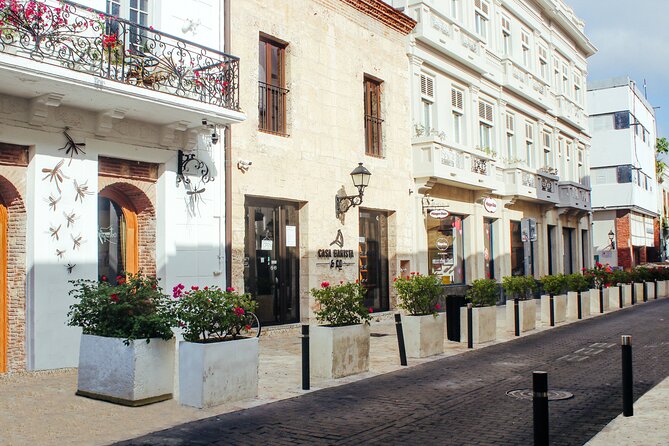
The tour starts at Casa Barista & Co., located at Arzobispo Meriño 268 in Santo Domingo. From there, you head into the historic core on foot and return to the same meeting point at the end.
That “return to start” detail matters. It usually means fewer logistical hiccups and less time in transit. It also fits the reality of walking tours: you’re spending your energy on sidewalks, not on figuring out where you’re going next.
Small-group format makes the difference in two practical ways:
- You’re less likely to get swept along at a fixed pace.
- Guides can adjust timing if someone wants more context (or if a museum is closed when you arrive).
Also, the tour is bilingual (English and Spanish). If you’re not fluent, that’s still helpful—you can follow the story clearly and catch extra nuance in the second language when it comes up.
The coffee-and-beer rhythm: what’s included and how to pace it
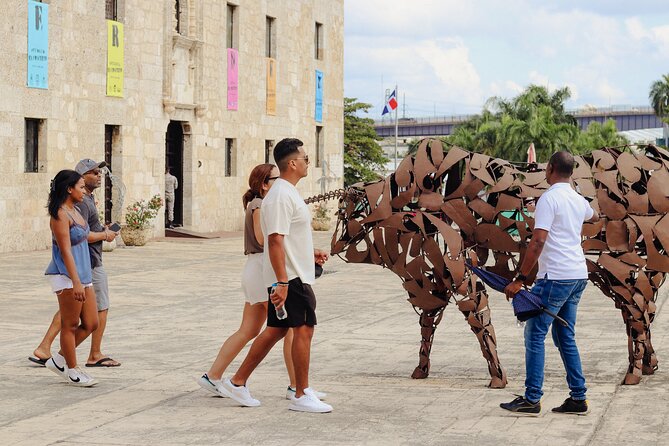
Yes, you get a drink before you’re even deep into the tour. You’ll choose one specialty beverage—latte, cappuccino, tea, or hot chocolate—plus a bottle of water. Then, later, you’ll do a local beer tasting and also sample mama juana, the Dominican spiced rum blend.
Here’s why that pacing is smart for you: food and alcohol stop being “random” when they’re tied to moments of the walk. It breaks the sightseeing into sections so you’re not just staring at stone for two straight hours.
A few practical tips based on how walking tours work:
- If you’re sensitive to alcohol, take the tiniest sip and save your appetite. The tastings are included, but you control what you actually drink.
- If you pick tea or hot chocolate as your first drink, it can be a gentler start.
- Wear comfortable shoes. You’ll be moving between plazas, churches, and a handful of ruins and exterior views.
Parque Colón: Columbus-era symbolism in a small central square
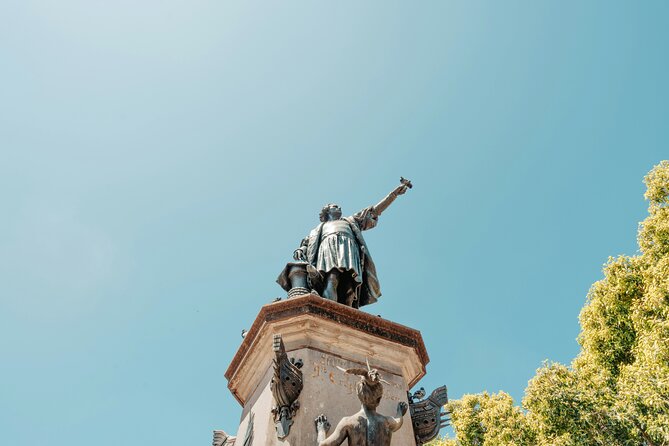
Your first major stop is Parque Colón, the central square in Santo Domingo’s historic district. The key feature here is the statue of Christopher Columbus. The square was renamed in 1887 in his honor, which is a detail worth knowing because it shows how the city’s public memory got reshaped long after the original era.
In practice, this stop works like a “set the stage” moment. You get a visual anchor for the stories you’ll hear later—colonial ambition, European arrival narratives, and the way those ideas became marble monuments.
Catedral Primada de las Américas: first in the Americas, still a must-see
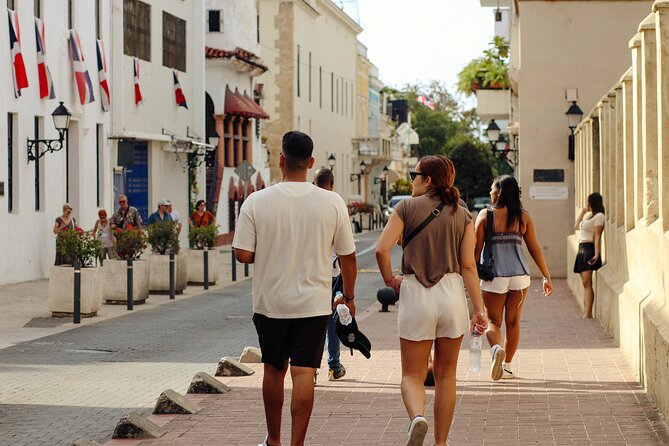
This is one of the headline stops for a reason. The Catedral Primada de las Américas (Santa María la Menor) is described as the first and oldest cathedral in the Americas, with construction beginning in 1504 and taking 46 years.
The tour includes admission here, which is a big value point. Looking at a cathedral from the outside is nice, but entering lets you see details you’d otherwise miss—especially when your guide explains what you’re looking at and how the building fits into the early colonial period.
Two practical considerations:
- Cathedral hours can affect entry, and it may be closed on Mondays.
- If you enter, you must wear clothing that covers your shoulders and knees.
If you’re traveling with a light outfit, plan ahead. A scarf or layer can save you from last-minute problem-solving.
Calle Las Damas: what the first paved road feels like
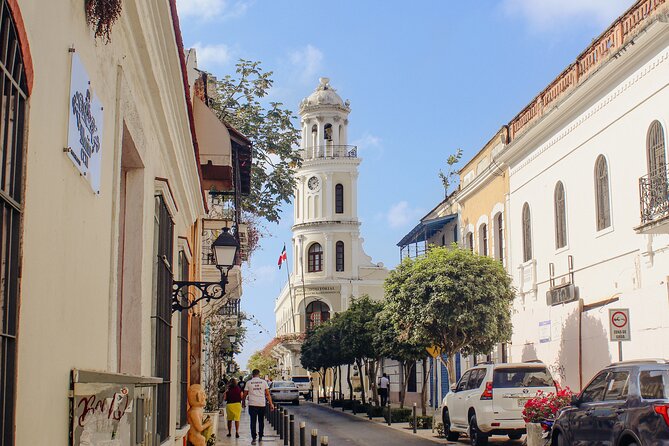
Calle Las Damas is famous as the street of the ladies, and it’s also described as the first paved road in the Americas. The architecture dates back to the 16th century, and the street is narrow—now lined with colonial-era buildings that have been repurposed as museums and embassies.
This stop is more than “cute cobblestones.” It’s where you start seeing how daily life would have worked in the earliest colonial streets: limited space, strong visual boundaries, and buildings designed for long-term presence.
It’s also a great photo walk if you’re into architecture and street-level details. Just be ready for the reality of a working neighborhood—people live, work, and visit here now.
Ozama Fortress and the Pantheon: power and national memory in one stretch
The itinerary includes Ozama Fortress, built by the Spanish in the early 16th century and described as the first permanent military structure in the Americas. It’s framed like a medieval castle, which helps you understand why it mattered: fortifications like this weren’t symbolic—they were the backbone of early control.
Then you move toward the Pantheon of the Fatherland, an 18th-century Jesuit church that functions as the national mausoleum of the Dominican Republic. It’s where the remains of national heroes are housed, guarded by a presidential honor guard.
There’s a catch: the Pantheon is currently listed as closed for renovations, so you’ll see it from the outside. That’s still useful. Even from outside, the Pantheon’s role in national identity is obvious once you know what it represents.
If you’re the type who loves buildings with a job—defense, governance, commemoration—this segment will click. The city isn’t presenting history as a museum-only display. It’s layered into civic space.
Reloj de Sol: a stone clock that kept officials on schedule
Next up is the Reloj de Sol, a tall stone sundial clock located in front of the Royal Houses Museum since 1753 in the colonial city. The tour description notes it’s about 12 feet tall and was used by government officials to keep track of time.
That detail is small, but it helps you imagine daily power. Timekeeping wasn’t abstract. It was tied to administration and public order. Standing near a sundial built for official use makes history feel less distant.
This stop is quick, free, and easy to pair with the next major museum moment.
Museo de las Casas Reales: the Spanish governor’s court to a museum story
The Museum of Royal Houses (Museo de las Casas Reales) is included on the tour, with admission covered. The site served as the Spanish Governor’s Royal Court in the 16th century.
The museum’s focus is also important: it offers an overview of Dominican Republic history from colonialism to independence from Spain in 1821. That’s a wide arc, and it means you’re not just learning “what happened”—you’re learning how the colony became a nation.
Two realities you should know:
- The Royal Houses museum is under maintenance, so you may see work being done.
- It’s closed on Mondays, which can affect whether you enter.
If you’re coming on a Monday, don’t assume you’ll see inside here. Still, the tour generally shares the relevant context even when museums can’t be visited.
Plaza de la Hispanidad and Alcázar de Colón: romantic plaza views plus real early power
At the end of Calle Las Damas, you’ll reach Plaza de la Hispanidad (also described as Plaza de España). This esplanade is framed as charming and romantic, and it’s a classic “pause and look around” stop because you can take in the Alcázar de Colón palace nearby.
The Alcázar de Colón is described as the first European palace fortified in the Americas, built between 1510 and 1514, with Gothic and Renaissance styling. It’s also noted as the only known residence of a specific historical figure in the early Americas—information your guide can connect to the larger story.
Right now, the Alcázar de Colón is listed as closed for renovations, so you’ll see it from the outside. Even then, this stop can be satisfying because the architecture is built to be seen at the right angle in a plaza setting. It gives you a “big picture” view of what elite colonial life looked like.
Ruinas de San Francisco and Hospital Saint Nicholas of Bari: ruins that still teach
Two of the stops lean heavily into “place-as-story.”
Ruinas de San Francisco: the San Francisco Monastery ruins are described as rustic walled ruins in the Colonial City. They’re noted as the first-ever Franciscan monastery in the New World, with a turbulent history including fire damage caused by a candle incident (as part of the site’s description).
Hospital Saint Nicholas of Bari: San Nicolas de Bari Hospital, built between 1503 and 1508 under Governor Nicolás de Ovando, is described as the oldest hospital in the Americas and a model for others. Today, it lies in ruins on the north side and still signals the early spread of institutional care.
These aren’t “wow” stops because of their current condition. They’re “wow” stops because of what they represent. When you can connect the ruins to their original purpose, you get a fuller understanding of colonial society: faith, care, social order, and how those systems were built.
What the guides (like Jean Carlos and Paco) add to the value
This tour is rated extremely high, and the repeated theme is the guide effect. Names that show up include Jean Carlos and Paco, both described as friendly and funny, plus strong on history, culture, religion, and answering questions.
That matters for you because walking tours can become a monotone lecture if the guide can’t steer. The best ones turn landmarks into stories you can actually remember. In this case, the tour format gives the guide space to do that—short stops, then context, then a few minutes to look around on your own.
You’ll also get bilingual guidance, which often means better clarity if your Spanish is limited. It’s one thing to see a cathedral and another thing to understand why it’s called first, oldest, and how it relates to the early settlement narrative.
How to decide if this tour fits your style
You’ll likely love this if you:
- Want a concentrated look at the Colonial Zone’s key monuments in about two hours.
- Like food-and-drink moments woven into sightseeing, not tacked on.
- Prefer a small group (max 12) where questions feel normal.
You might want a different option if you:
- Expect every museum to be open on the day you book. Mondays can limit indoor visits.
- Care most about entering every single building. The Alcázar de Colón and the Pantheon are currently listed as closed for renovations, so you’ll see them from the outside.
Should you book this beer and specialty coffee walking tour?
If your goal is to see the major “first and oldest” Dominican anchors—plus pick up a practical feel for the Colonial Zone—this is strong value for $59. The drink program (specialty coffee or tea, beer tasting, water, and mama juana) makes the experience feel like more than just a history walk, and the small group size helps keep the pace humane.
I’d book it if you can handle the real-world part of travel: some days mean closures or exterior-only views. If you’re traveling on a Monday, plan mentally for fewer museum interiors. If you’re flexible and want a lively, story-driven stroll, this one is an easy yes.
FAQ
How long is the Santo Domingo Small Group Walking Tour?
The tour runs for about 2 hours (approx.).
What’s included in the price?
Admission to the Museum of the Royal Houses and to the Catedral of Santa María la Menor is included (with the note that access can depend on schedules). You also get 1 specialty drink (latte, cappuccino, tea, or hot chocolate), a local beer tasting, one bottled water, and a mama juana tasting, plus an expert local guide.
Is it a small group tour, and is it bilingual?
Yes. The tour has a maximum of 12 travelers, and it is bilingual in English and Spanish.
Can I visit the museum and cathedral on Mondays?
The Royal Houses museum is closed on Mondays, and the cathedral may be closed on Mondays as well. If a site is closed, the guide will still share the relevant information, but you might not be able to enter.
Do I need specific clothing for the cathedral?
Yes. Visitors to the cathedral must wear clothing that covers their shoulders and knees.
What happens if I need to cancel?
You can cancel for a full refund if you cancel at least 24 hours before the experience’s start time. If you cancel less than 24 hours before, the amount paid is not refunded.