REVIEW · VILNIUS
Vilnius: Morning Coffee Tour with Local Guide
Book on GetYourGuide →Operated by Bike Baltic Velotakas · Bookable on GetYourGuide
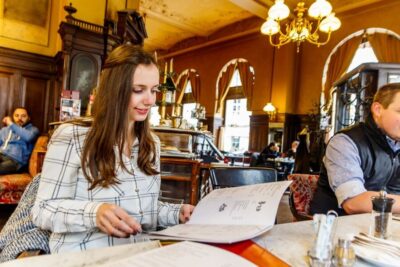
Coffee in Vilnius comes with a history lesson. This morning coffee walk pairs a real local cafe stop with guided Old Town storytelling, so you’re not just drinking caffeine—you’re learning how the streets got their meaning. I like that the pace stays easy while you bounce between landmark sights and quieter backyards with an expert like Domas guiding the way.
Two things I especially liked: first, the freshly brewed coffee (plus tea or water) at the start, which makes the tour feel like a proper local morning instead of a rushed add-on. Second, the route hits major places in Vilnius and then bends into the smaller courtyards and shortcuts where history shows up in everyday details—Town Hall Square, the churches, and the Cathedral Square finale, plus the stories about how Vilnius once played roles of Moscow, Vienna, and the Vatican. One drawback to consider: this is a history-and-sight focused walk with one coffee stop, so if you want a longer food crawl or lots of tastings, you’ll feel a bit limited.
In This Review
- Key highlights at a glance
- Morning Coffee Walk: Where Vilnius Gets Personal
- Why Vilnius Old Town Works So Well for a Coffee Tour
- Stop 1: The CAFFEINE LT Coffee Start (Traku street 11)
- Church of the Assumption: The Day Turns Formal
- Vokiečių g. 10: When Vilnius Played Parts
- Town Hall Square: Power in Stone, Life in the Square
- Church of St. Nicholas and Pilies Street: Faith Meets Street Life
- Presidential Palace Area: Vilnius’s Big-Stage History
- Jewish Quarter and Vilnius University: The Stories Between the Stops
- Cathedral Square Finish: A Smart Place to End
- Guide Quality: Why Domas Keeps Coming Up
- Price and Value: Is $31 a Fair Deal?
- Practical Tips to Make the Most of the Two Hours
- Who This Tour Suits Best (And Who Might Prefer Something Else)
- Should You Book This Morning Coffee Tour?
- FAQ
- Where does the tour start?
- How long is the Vilnius morning coffee tour?
- What’s included in the price?
- Is the tour guide in English?
- What are some of the main sights you’ll pass?
- Where does the tour end?
- Can I cancel or adjust plans?
Key highlights at a glance
- Start at CAFFEINE LT on Traku street 11, with coffee, tea, or water to set the tone for the walk
- Old Town backyards and courtyards you’re unlikely to find without a guide steering you
- Landmarks in compact time: Town Hall Square, Church of St. Nicholas, and Cathedral Square
- Multicultural Vilnius context across religious and community history as you move through the center
- Stops for photos and patient answers—useful when you’re trying to understand what you’re looking at
- A guide with strong Vilnius storytelling, including Domas, who shares history with practical perspective
Morning Coffee Walk: Where Vilnius Gets Personal
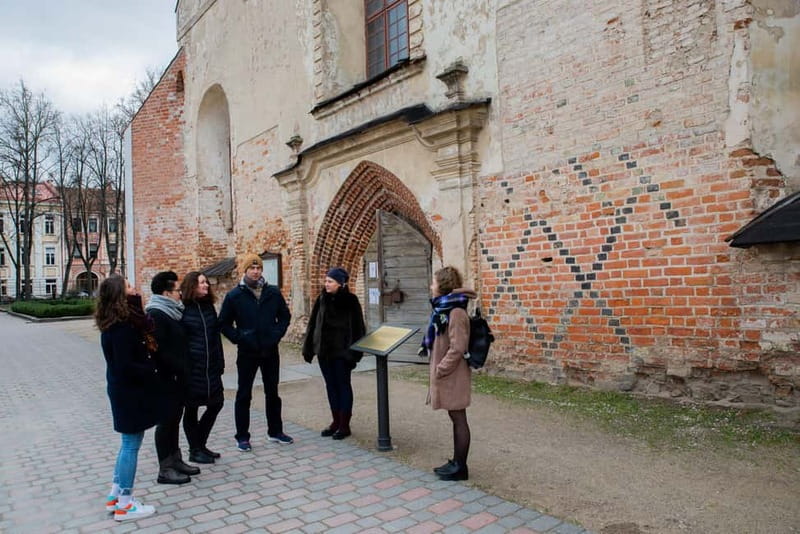
Vilnius can feel like a city you should slow down for. This tour gives you an easy reason to do exactly that: you meet at CAFFEINE coffee shop on Traku street 11, grab your cup, and then walk while the guide turns the Old Town into something you can actually picture and remember.
The best part is the balance. You’ll see the big name sights—like Cathedral Square—but you also get sent into side lanes and small courtyards where Vilnius feels lived-in rather than museum-still. That combo is why this works so well as a first morning in town.
And yes, the coffee helps. Even if you don’t care about a perfect espresso pull, the cafe start makes the whole experience feel local from minute one, not like a bus-tour feeling with a random coffee break.
You can also read our reviews of more tours and experiences in Vilnius.
Why Vilnius Old Town Works So Well for a Coffee Tour
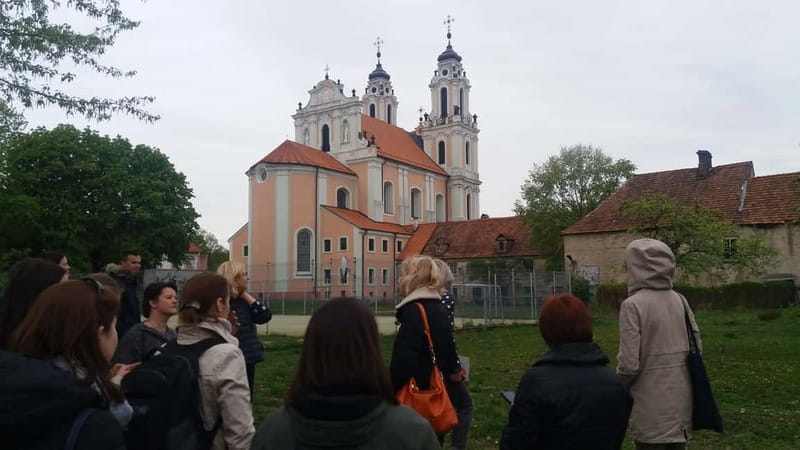
Old Town Vilnius is UNESCO-listed for a reason: the city’s layout and architecture make it easy to connect stories to specific places. Walking matters here, because the meaning is often in the “in-between”—the approach to a square, the bend of a street, the way one church relates to the next building.
A coffee tour also gives you a smart time slot. Late morning can get crowded, but early day is when you still have enough quiet to listen and enough light to enjoy photos. At two hours, you’re not committing your whole morning either.
Most importantly, this kind of tour helps you avoid the classic first-day trap: staring at pretty buildings without knowing what you’re seeing. Here, the guide gives you the context so the streets make sense.
Stop 1: The CAFFEINE LT Coffee Start (Traku street 11)
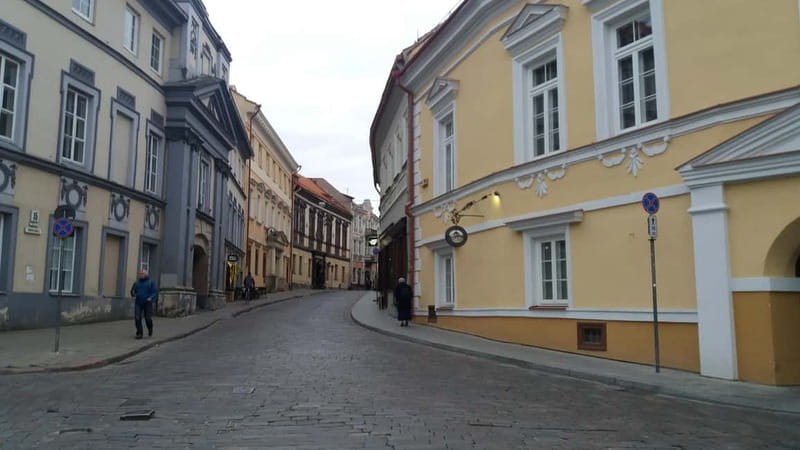
Your tour begins at CAFFEINE LT on Traku street 11. The first chunk is simple: you get your cup of freshly brewed coffee (and there’s tea or water too), then you’re off.
I like this opening for two reasons. First, it’s a low-pressure way to meet your guide and get oriented while everyone’s still warm from the cafe. Second, the guide uses the coffee time as a springboard—so the history doesn’t feel like an info dump right after you leave.
Practical note: treat this like the start of the walk, not a long sit-down. You’ll want to keep your drink in hand until you’re ready to move, then settle into the walking rhythm.
Church of the Assumption: The Day Turns Formal
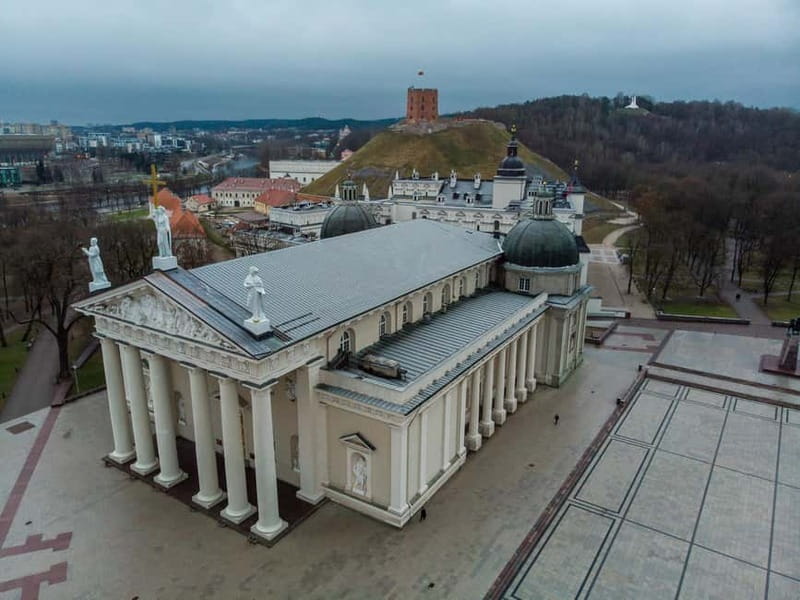
After coffee, the tour moves to Church of the Assumption of the Blessed Virgin Mary. Even in a short stop, the guide’s job is to point out what makes the building feel significant in Vilnius’s story—especially how faith and power shaped everyday life over time.
This is one of those places where the exterior can look gorgeous but still feel “background pretty” if you don’t know what to notice. With a guide, you learn how to read the church in plain language: what it represents and why it mattered beyond religious ceremonies.
The stop is short, so don’t expect a long architectural lecture. Instead, think of it as a quick reset: you see a key landmark, you learn what to watch for, then you keep moving.
Vokiečių g. 10: When Vilnius Played Parts
From there you head toward Vokiečių g. 10, another brief guided moment designed to connect the Old Town’s layout to bigger regional history. This is where the tour’s stories start feeling more cinematic.
One of the tour’s most distinctive elements is hearing about the places where Vilnius once played roles of Moscow, Vienna, and the Vatican. You’re not being asked to memorize a timeline. Instead, the guide frames how Vilnius borrowed status, identity, and symbolism through its buildings and institutions.
If you like history that feels concrete—history tied to specific streets—this stop style is perfect. If you only want the most famous landmarks, you might find the short stops less satisfying. But for me, the point is the connection.
Town Hall Square: Power in Stone, Life in the Square
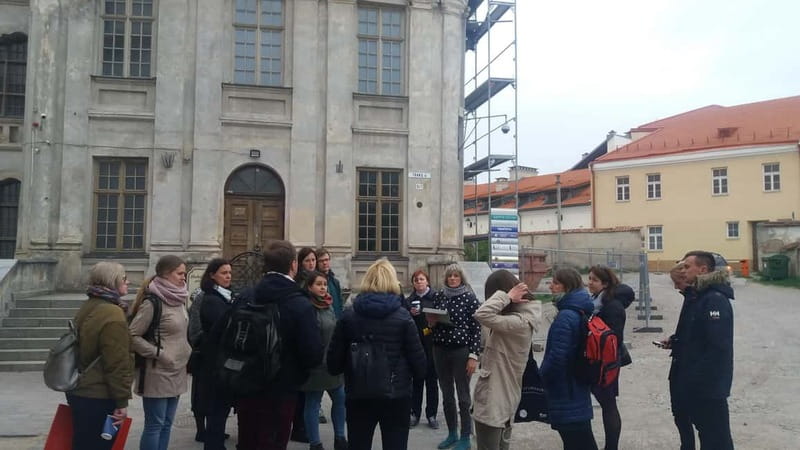
Next up is Town Hall Square Vilnius, a spot that’s easy to recognize and hard to understand without help. Squares are where cities concentrate their political and social life, and Town Hall Square is exactly that kind of place.
Even with limited time, the guide’s explanation helps you see why this square matters. It’s not just a photogenic open space. It’s part of the machine of governance and public life—where people would gather, negotiate, and make decisions that affected real daily routines.
This is also a useful moment if you’re building a mental map of the city. After this, the remaining route feels more navigable because you’ve got one big reference point in your head.
Church of St. Nicholas and Pilies Street: Faith Meets Street Life
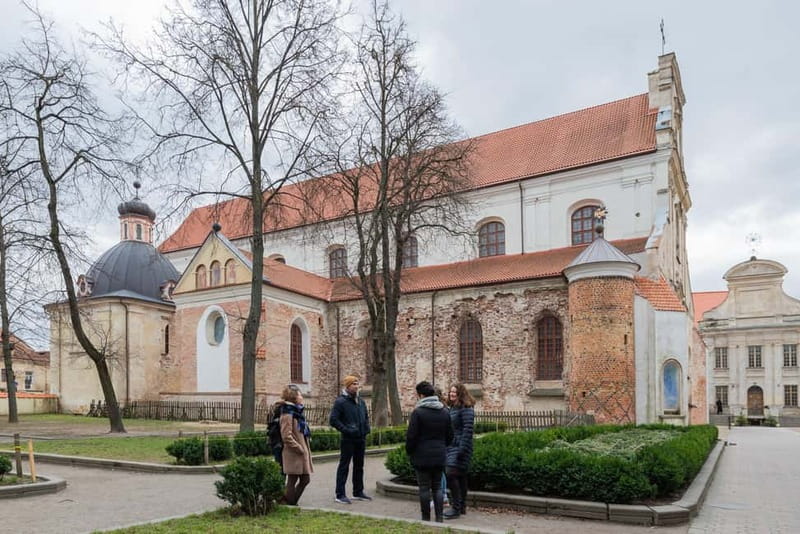
Then you visit the Church of St. Nicholas, Vilnius, and after that you move to Pilies Street. Together, these two stops show a simple truth about Vilnius: religion and street life weren’t separate worlds.
The church stop gives you another landmark anchor, and the guide adds meaning so you’re not just looking at a beautiful facade. Then Pilies Street shifts the tone. This is the kind of street where you can feel the rhythm of visitors, shops, and daily movement.
The tour format keeps things brisk, with guided time at each spot. But it also gives you enough to feel the shift in atmosphere, which helps the Old Town stop blending into a blur of similar-looking buildings.
Presidential Palace Area: Vilnius’s Big-Stage History
You’ll also spend time at the Office of the President of the Republic of Lithuania area. This part matters because it ties modern Lithuania to the older layers of the city’s identity.
The guide connects institutions to the wider multicultural, multi-religious context you’ll keep hearing about as you walk. You’re moving through a center where different communities shaped the city’s culture, and the tour helps you understand that this wasn’t a single-story city—it was always layered.
This is where the “Vilnius played roles of…” theme can feel especially relevant. Not because the city literally copies those places, but because it carried similar symbols and ambitions at different moments in history.
If you’re the type who likes the why behind the what, this segment tends to land well.
Jewish Quarter and Vilnius University: The Stories Between the Stops
The route also highlights the historic Jewish Quarter and Vilnius University. Even when you’re not standing there for a long lecture, you should still come away with a clearer sense of why these areas matter to the city’s character.
I like how the tour keeps bringing you back to the idea of a city shaped by multiple communities. You don’t need to be a scholar to understand the basics, because the guide frames it in human terms: who lived here, what institutions meant, and how the city functioned socially and culturally.
If you’re spending only a day or two in Vilnius, these references are a great way to guide your own follow-up exploring later. You’ll know what to look up and where to return with more time.
Cathedral Square Finish: A Smart Place to End
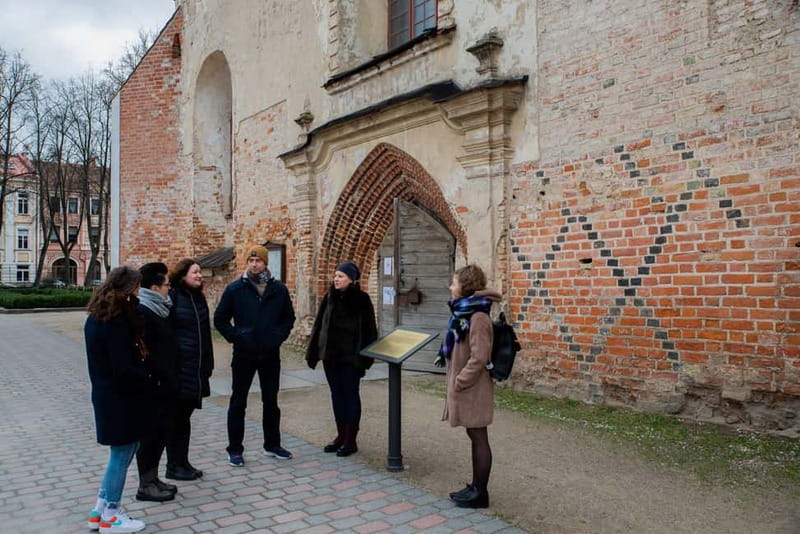
The tour finishes at Cathedral Square, which is a smart ending point because it’s central and full of energy. By the time you arrive, you’ve already been given the context for many of the landmark elements around the Old Town.
I also like finishing at a place like this because it’s easy to continue your day. You can grab lunch nearby, join the next sight, or just take a breather and absorb the area without needing another long walk to reach your bearings.
The guide’s job is to leave you oriented. The route accomplishes that by ending at a visual anchor you’ll recognize immediately.
Guide Quality: Why Domas Keeps Coming Up
A lot of walking tours promise you history. Fewer guides make it understandable and fun to listen to. The English-speaking guides on this tour, including Domas, stand out for a few practical reasons that show up again and again in feedback.
You’ll get answers to questions without the awkward, rushed vibe. You’ll also get a pace that respects your camera time—there’s room for photo stops so you don’t feel like you’re dragging behind. And the explanations tend to include everyday perspective, like how life across eras affected the way people moved through the city.
That mix matters. If you’ve been to cities where the guide talks at you for 90 minutes, you’ll appreciate the difference here. It’s active. You’re walking, looking, and learning in small pieces.
Price and Value: Is $31 a Fair Deal?
At $31 per person for about two hours, this is priced like a focused walking tour—not a premium day-long experience. What makes the math work is that coffee (plus tea or water) is included, and you’re paying for a live English guide to connect the landmarks and backyards into a story.
In other words, you’re not just buying a drink and a stroll. You’re buying orientation plus context in a compact format. For many people, that’s exactly what they need on day one.
Is it expensive compared to buying coffee yourself? Sure. But it’s also not expensive compared to the time value of a good guide, especially in a city where the details matter and the hidden courtyards are hard to find on your own.
Practical Tips to Make the Most of the Two Hours
Here’s how to enjoy this tour without stressing out:
- Arrive a few minutes early so you can settle into the cafe stop calmly at CAFFEINE LT.
- Wear shoes you trust. The tour is built around walking and quick stop-and-go exploring.
- Bring questions. If you want the multicultural and multi-religious context explained in real terms, ask for it.
- Use the photo breaks. That’s when you’ll get the best angles without feeling like you’re interrupting the guide.
Also, keep your expectations aligned with the format: it’s not a long museum day. It’s a smart morning walk that teaches you how to read the Old Town.
Who This Tour Suits Best (And Who Might Prefer Something Else)
This fits well if you’re:
- Visiting Vilnius for the first time and want a fast, guided orientation
- A coffee person who wants a real cafe start instead of a purely informational walk
- Someone who enjoys hidden courtyards, quiet side lanes, and historical stories tied to physical places
It may feel less ideal if you:
- Want lots of food stops or a longer tasting experience
- Prefer “big monument only” sightseeing and don’t care about side stories
- Want a deep archaeological or academic level lecture in one morning
For most first-timers, though, it’s a strong way to get your bearings fast.
Should You Book This Morning Coffee Tour?
I’d book it if you want a morning in Vilnius that feels both simple and meaningful. You’ll get fresh coffee at CAFFEINE LT, a walk through major Old Town landmarks like Town Hall Square, Church of St. Nicholas, and the Cathedral Square finish, plus the kind of courtyard-and-shortcut storytelling that makes the city feel smaller and more personal.
Skip it only if your priority is a longer food crawl or you’re determined to explore entirely on your own with zero guided context. If that’s you, Vilnius can absolutely be DIY. But if you want to understand what you’re seeing while you’re walking—this is a very practical start.
FAQ
Where does the tour start?
The tour meets at CAFFEINE coffee shop, Traku street 11 (CAFFEINE LT).
How long is the Vilnius morning coffee tour?
The tour lasts 2 hours.
What’s included in the price?
You get an experienced guide and a cup of freshly brewed coffee. The drink options also include tea or water.
Is the tour guide in English?
Yes. The tour is guided in English.
What are some of the main sights you’ll pass?
You’ll see and learn about landmarks such as Town Hall Square, Church of the Assumption of the Blessed Virgin Mary, Church of St. Nicholas, Pilies Street, the Office of the President of the Republic of Lithuania, and you end at Cathedral Square. The route also references the historic Jewish Quarter and Vilnius University.
Where does the tour end?
The tour ends at Cathedral Square.
Can I cancel or adjust plans?
Yes. You can cancel up to 24 hours in advance for a full refund, and you can reserve now and pay later.